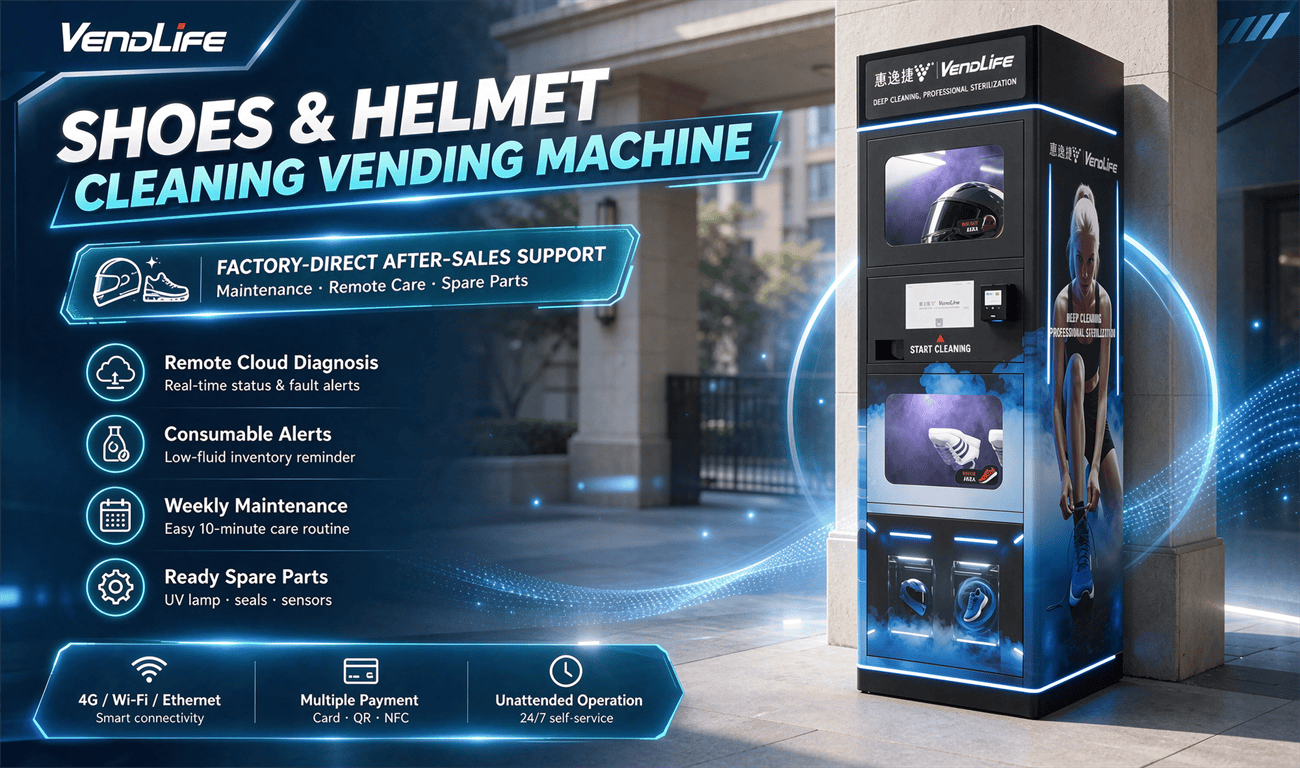
A shoe and helmet cleaning vending machine earns its keep quietly: one customer after another drops their gear into the chamber, pays on the touchscreen, and walks away with deodorized, sterilized kit. The first month after installation usually looks exactly like that. Then the support messages start — shoes wedged at the wrong angle, a chamber door that will not latch, a cycle someone says never finished. None of these are hardware failures; they are after-sales gaps. The HYJ-JN038 shoe and helmet cleaning vending machine was built to keep those gaps small, and this guide walks operators, wholesale buyers and procurement teams through everything that keeps it selling after installation day: correct customer habits, a weekly care routine, remote diagnostics and the checks to make before a bulk order.
What One Cleaning Cycle Actually Does
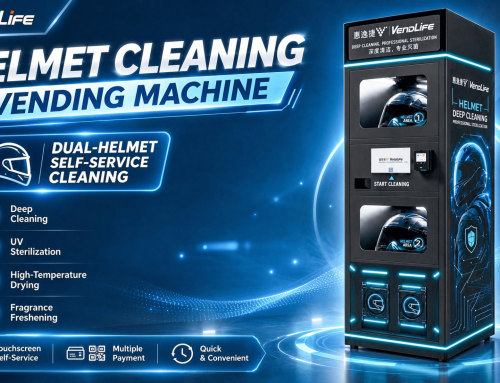
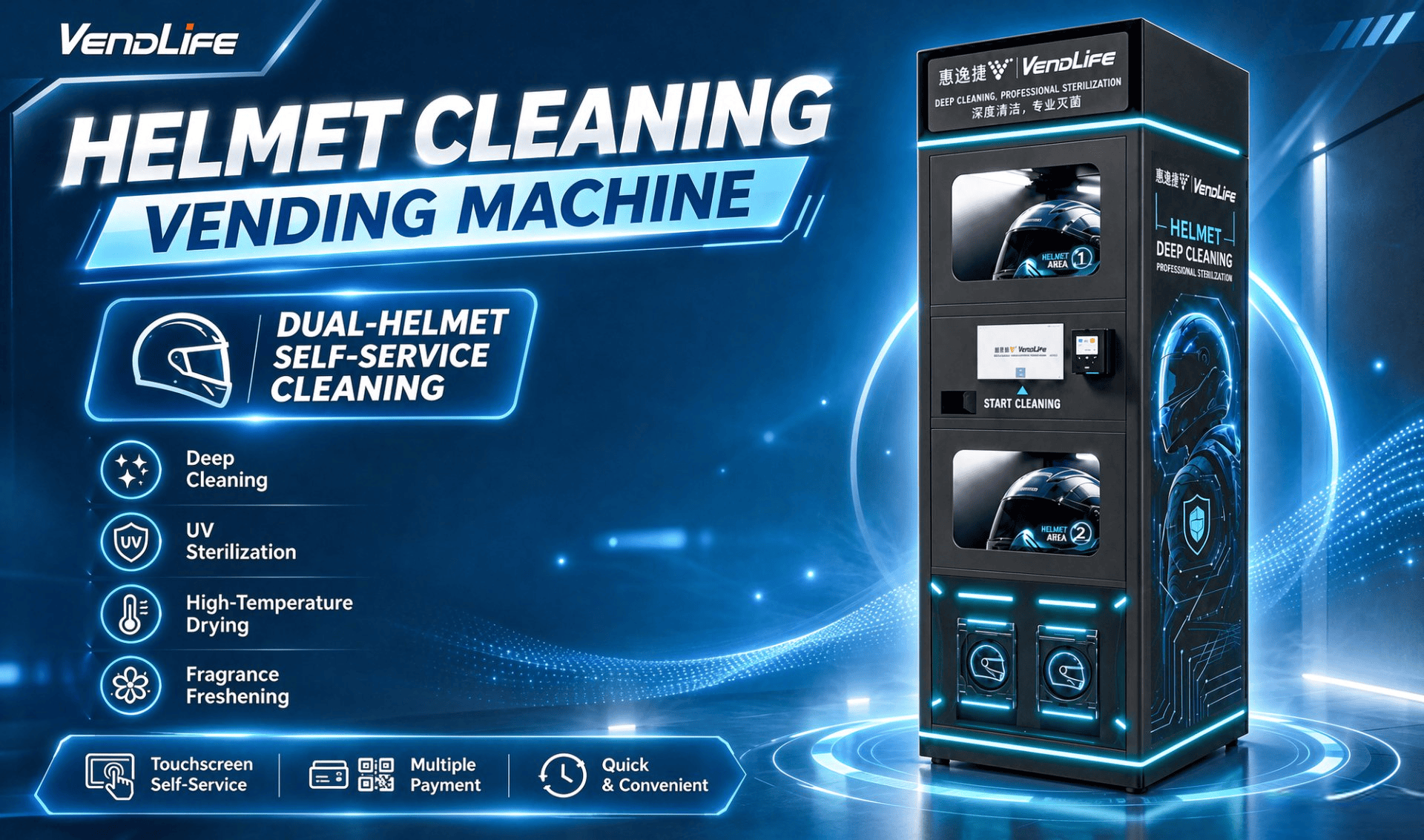
Understanding the cycle is the fastest way to answer the most common customer question — how does a shoe cleaning vending machine work — and to diagnose anything that goes wrong later. Inside the HYJ-JN038, a single paid run sequences four treatments automatically:
Sterilization and drying durations are adjustable through intelligent timing, so operators can tune the cycle for leather helmets, running shoes or heavy-duty work boots without touching the hardware. The machine itself runs on a standard 110–240 V supply at a rated 6500 W — the kind of draw that belongs on a dedicated circuit, which matters for siting and is covered below.
Siting and Installation Checks Before the First Cycle
Most first-week faults trace back to placement, not parts. The HYJ-JN038 stands 1.9 m tall, 0.6 m wide and 0.59 m deep including its advertising light box, and weighs 130 kg. Three checks take minutes:
- Floor and clearance. A level, hard floor keeps the cabinet square so both chamber doors latch cleanly; leave working clearance in front for gear drop-off and pickup.
- Power. Give the 6500 W heating and drying system a properly grounded dedicated circuit shared with nothing else — tripped breakers are the avoidable emergency call of this machine class.
- Ventilation. The cycle moves warm vapor, so an indoor sheltered spot with normal air circulation keeps the exterior light box and touchscreen cool and dry.
Once sited, connect the machine through 4G, Wi-Fi or Ethernet — all three are built in — and confirm it appears in the cloud backend before selling the first cycle.
The Two Customer Habits That Cut Support Tickets
Almost every user-side complaint on a self-service cleaning machine comes down to two habits, and both are fixable with signage and a line on the touchscreen.
Shoe Placement: Into the Shoe Area, Toe First, Nothing Wedged
The shoe chamber is sized for everyday footwear, and the machine’s cleaning arms expect shoes placed naturally on the chamber floor — toe in, sole down, one pair at a time. Shoes jammed sideways, stacked on top of each other, or wedged heel-first into the corners are the single largest source of “the machine did not clean properly” claims. A simple pictogram decal at the shoe area opening, and a placement reminder on the 10.1-inch touchscreen, removes most of them before they happen.
Helmet Fit and the Sensor Lock
The helmet compartment uses a smart sensor lock with a sealed cleaning chamber: the door must close fully before the cycle will start. Helmets with oversized peaks or attached accessories can keep the door from seating — when that happens, the screen prompts to re-seat the item instead of the machine forcing a cycle. Train site staff to show customers the “close until it clicks” habit; a chamber that starts correctly finishes correctly, and the transparent window lets users watch the process, which quietly converts skeptics.
A Weekly Care Routine Operators Can Run in Ten Minutes
The HYJ-JN038 is designed for unattended sites, but a short weekly walk-through keeps uptime high on any route:
- Wipe the transparent chamber windows and the touchscreen — a clean window is a sales asset, since passers-by watch the steam cycle in action.
- Check consumables. The cloud backend pushes low-inventory alerts, but a physical glance at the fragrance and cleaning fluid levels catches what sensors lag on.
- Run one free test cycle and watch it complete — drying temperature, UV indicator and fragrance release should all fire in sequence.
- Confirm both chamber doors and the sensor lock respond, and that the payment terminal (POS card, QR code and NFC) reads normally.
- Glance at the drainage path around the base; a dry floor means the vapor recovery is working as designed.
Let the Cloud Do the Diagnosing
The fastest after-sales tool on this machine is the one operators use without visiting the site. Through the cloud management system, the backend reports real-time machine status, supports data analytics and accounting, and — most importantly for service teams — runs intelligent fault diagnosis that flags what failed before anyone drives out. Pricing and sterilization timing can be adjusted remotely, low-inventory alerts arrive automatically, and the connection runs over 4G, Wi-Fi or Ethernet, so a machine on a college campus and one in a shopping mall report through the same dashboard. For operators running multiple sites, that turns after-sales from site visits into a daily five-minute dashboard review.
What Wholesale Buyers Should Confirm Before Ordering
For distributors and procurement teams comparing shoe and helmet cleaning vending machines from any manufacturer, the after-sales picture above converts into a short order checklist:
- Chamber layout matches the destination. The HYJ-JN038 pairs a helmet area and a shoe area with two adjustable shelves; motorcycle shops, gyms, hotels and delivery stations weight those chambers differently — confirm the split fits your customer base.
- Power compatibility. Rated 6500 W at 110–240 V, 50/60 Hz — confirm destination-market wiring can feed a dedicated circuit before quoting installation.
- Connectivity options. 4G, Wi-Fi and Ethernet are all standard; ask which path suits each site type in your market.
- Payment rails. POS card terminal, QR code and NFC are supported; verify the module integrates with the mobile payment systems your customers actually use.
- Serviceable parts. UV lamp, chamber seals and door sensors are the consumable side of the hardware; a factory-direct supplier should quote them with the machine.
Operators building a full hygiene retail offer should also look at the wider pay-per-use model behind automated helmet care stations, where the same sterilization logic is applied to shared rental gear.
The After-Sales Checklist at a Glance
| Stage | Action | Done when |
|---|---|---|
| Siting | Level floor, dedicated grounded circuit for 6500 W, ventilation, 130 kg load check | Doors latch square, machine online |
| Customer habits | Shoe placement decals, sensor-lock signage on touchscreen | Placement claims stop rising |
| Weekly routine | Windows, consumables, test cycle, payment check | Ten-minute walk-through logged |
| Remote care | Fault diagnosis, low-inventory alerts, remote pricing | Dashboard checked daily |
| Spares | UV lamp, seals, sensors on hand per route | No downtime waiting for parts |
Run the stages in order and the HYJ-JN038 stays a revenue machine instead of a service ticket: the vapor cycle keeps gear fresh, the sensor lock keeps cycles honest, and the cloud backend keeps the operator ahead of every fault. Wholesale buyers preparing bulk deployments should treat this checklist as the standard handover document — and get it into the hands of whoever manages the route.
VendLife builds shoe and helmet cleaning vending machines for operators, wholesale buyers and procurement teams worldwide — factory-direct supply, cloud remote management and full after-sales documentation with every unit.